Biotin for Hair Loss: What the Research Really Says
Biotin is everywhere in the hair wellness world.
From gummies and capsules to powders and “hair growth” formulas, biotin also known as vitamin B7 is frequently promoted as a simple solution for stronger, healthier hair.
But does biotin actually help with hair loss?
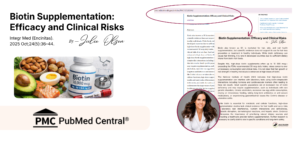
My peer-reviewed published abstract, “Biotin Supplementation: Efficacy and Clinical Risks,” examines the evidence behind biotin supplementation and highlights
an important distinction: biotin is essential to human health, but taking more of it does not necessarily mean better hair growth.
Biotin Is Important—But Deficiency Is Rare
Biotin is a water-soluble B vitamin that plays an important role in metabolic and cellular functions.
A true biotin deficiency can contribute to symptoms such as hair thinning. However, deficiency is considered uncommon in developed countries because biotin can be obtained through a variety of foods.
This distinction matters.
If someone is deficient, correcting that deficiency may be appropriate. But that does not mean high-dose biotin supplementation will improve hair growth in someone who already has adequate biotin levels.
More Biotin Does Not Necessarily Mean More Hair Growth
Many hair, skin, and nail supplements contain extremely high amountsof biotin sometimes as much as 10,000 mcg.
10,000 mcg vs. 30 mcgSome supplements contain up to 10,000 mcg of biotin compared with the recommended daily intake of 30 mcg for adults.
Despite the popularity of these products, current evidence does not clearly demonstrate that high-dose biotin improves hair growth or nail strength in otherwise healthy individuals.
This is why supplementation should not automatically be the first response to hair thinning.
The Hidden Risk: Biotin Can Interfere With Lab Tests
One of the most important concerns surrounding high-dose biotin supplementation has nothing to do with the hair itself.
Biotin can interfere with certain laboratory tests.
Some laboratory tests use biotin-streptavidin interactions as part of their testing process. High levels of supplemental biotin in the bloodstream may interfere with these tests and potentially produce inaccurate results.
This can affect testing involving certain hormone and cardiovascular markers, among others.
That means something taken casually for hair or nails may have implications when a healthcare provider is trying to interpret important laboratory results.
Who May Be at Greater Risk for Biotin Deficiency?
Although biotin deficiency is uncommon, certain individuals may have an increased risk and may require individualized evaluation.
These can include people with:
- Rare genetic disorders affecting biotin metabolism
- Chronic alcohol use
- Excessive consumption of raw egg whites
- Long-term intravenous feeding
- Long-term use of certain antibiotics or anti-seizure medications
- Gastrointestinal conditions that may affect nutrient absorption,
including Crohn’s disease or ulcerative colitis
In these situations, supplementation may have a clinical purpose but it should be based on the individual rather than the assumption that everyone experiencing hair loss needs more biotin.
Hair Loss Deserves a Deeper Investigation
When someone experiences thinning, shedding, or changes in hair quality, simply reaching for a high-dose supplement may overlook the bigger picture.
Nutrition, nutrient status, hormones, metabolic health, medications, gastrointestinal health, stressors, and other factors may all need to be considered depending on the individual.
The goal should be to understand why the hair is changing, not simply add another supplement.
Food First, Supplement Thoughtfully
Biotin remains an essential nutrient. But for most people, natural dietary sources should be prioritized before assuming high-dose supplementation is necessary.
My review of the evidence also highlights potential concerns associated with excessive supplementation, including laboratory test interference and possible nutrient interactions, metabolic effects, dermatological reactions, and hepatic strain.
Before beginning a high-dose biotin supplement especially if you are experiencing unexplained hair loss talk with a qualified healthcare provider who can evaluate your individual circumstances.
The Bottom Line
Biotin deficiency can contribute to hair thinning, but more biotin does not automatically mean more hair growth.
For healthy individuals without a deficiency, current scientific evidence does not support high-dose biotin as a proven treatment or preventive strategy for hair loss.
More research is needed to better understand biotin’s role in specific conditions and the long-term safety of high-dose supplementation.
For now, the evidence supports a more individualized approach: prioritize nutrient-rich foods, investigate potential contributors to hair loss, and use supplementation thoughtfully.
Biotin Supplementation: Efficacy and Clinical Risks
Julie Olson
Integrative Medicine (Encinitas).
October 2025; 24(5):36–44.
This peer-reviewed publication examines the scientific evidence surrounding biotin supplementation, its use for hair health, populations at risk for deficiency, and potential clinical risks associated with high-dose supplementation.