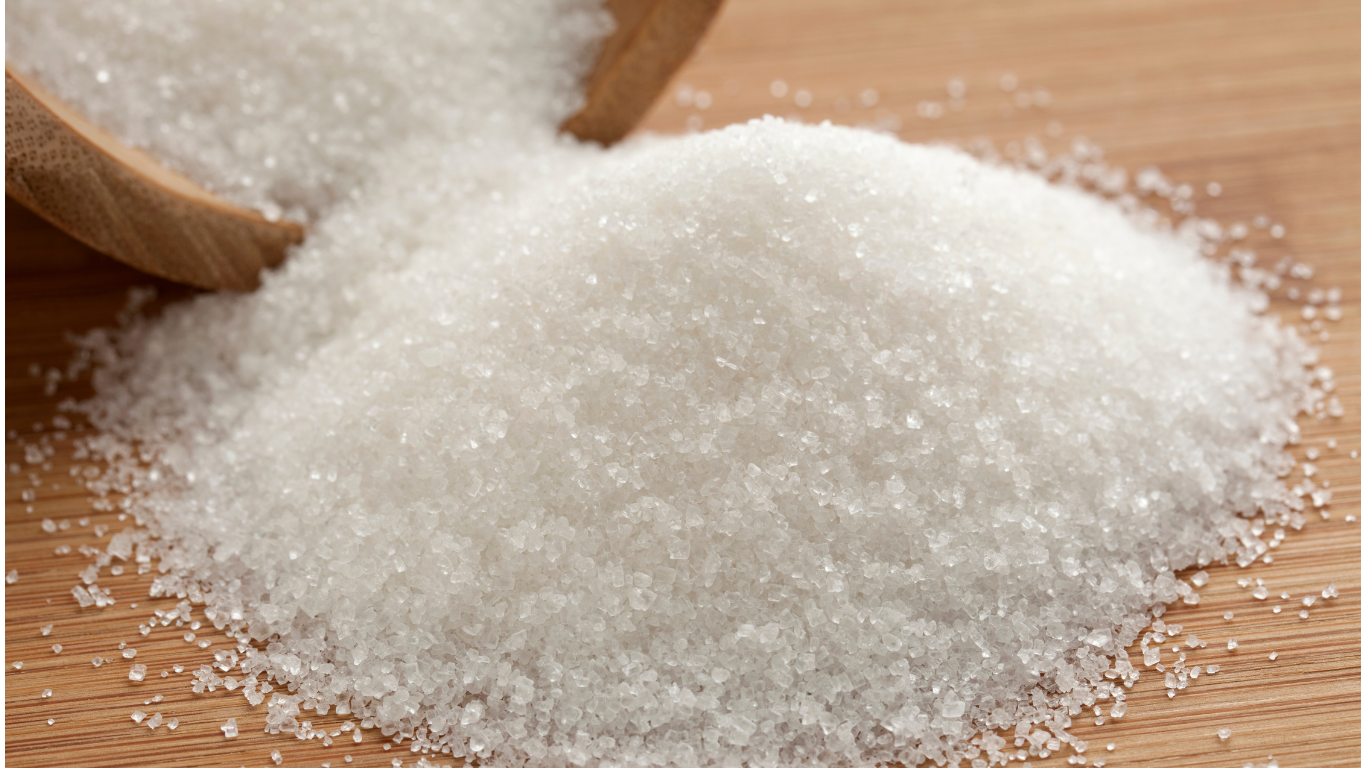
Sugar gets blamed for almost everything these days. But when it comes to longevity, the real question isn’t whether sugar is simply “good” or “bad.” It’s what type, how much, how often, and what else is happening metabolically.
I was pleased to be quoted as a nutrition expert in the Longevity Advice feature “Sugar and Aging: What You Need to Know,” an evidence-based overview of how sugar may influence aging through pathways involving glycation, inflammation, metabolic dysfunction, and diabetes.1
And one of the points I emphasized is important:
Carbohydrates are a main source of energy, converted by the body to power our cells.1
That may sound surprising in a world where carbohydrates are often treated as dietary villains.
But healthy aging isn’t about being afraid of an entire macronutrient.
It’s about understanding what your body actually needs while recognizing that a diet chronically high in added and highly refined sugars is very different from consuming nutrient-dense whole-food carbohydrates.
First, Sugar and Carbohydrates Are Not the Same Thing
Carbohydrates provide glucose that the body can use for energy, and carbohydrate-containing whole foods can also provide fiber, vitamins, minerals, antioxidants, and other beneficial plant compounds.
Think vegetables, berries and other fruits, beans, lentils, and minimally processed whole foods.
Then compare those with:
- Sugary beverages
- Candy
- Baked sweets
- Sweetened cereals
- Flavored coffee drinks
- Highly processed snack foods
- Sauces and dressings loaded with added sugar
The metabolic package is very different.
The American Heart Association recommends that women limit added sugar to approximately 25 grams, or 6 teaspoons, per day.2
And added sugar can accumulate quickly.
That’s why reading the Added Sugars line on a Nutrition Facts label often tells you far more than claims such as “natural,” “organic,” “plant-based,” or “healthy” on the front of the package.
Newer Research Makes the Sugar-Aging Conversation Even More Interesting
Since the Longevity Advice article was updated in early 2024, additional research has added another fascinating piece to the conversation: epigenetic aging.
Your chronological age is simply the number of birthdays you’ve had.
Biological aging attempts to measure how your body is aging physiologically.
Researchers can use what are sometimes called epigenetic clocks to examine patterns in DNA methylation associated with biological aging.
Research Highlight
A 2024 study analyzed data from 3,969 postmenopausal women in the Women’s Health Initiative. Researchers found that higher dietary intake of added sugar was associated with accelerated epigenetic aging.3
That’s particularly interesting for women in midlife and beyond.
It does not prove that consuming a specific amount of sugar makes you biologically older by a set number of years. This was observational research, and the researchers themselves called for additional studies to examine magnitude and causality.3
But it provides another reason to consider dietary patterns when we’re talking about healthspan, not simply lifespan.
Because living longer is only half the conversation.
We also want those additional years to be healthy ones.
Glycation: When Sugar Interacts With the Proteins That Keep Us Looking and Functioning Younger
Another important connection between sugar and aging is glycation.
Glycation is a process in which sugars react non-enzymatically with proteins, fats, or other molecules, eventually contributing to the formation of compounds known as advanced glycation end products, or AGEs.
AGEs naturally accumulate as we age.
But metabolic conditions involving elevated glucose can increase glycation, particularly in long-lived proteins such as collagen.4
Why does that matter?
Collagen isn’t important only for how our skin looks.
It’s a structural protein found throughout the body.
Research continues to explore how AGE accumulation in skin collagen and elastin can contribute to cross-linking, tissue stiffness, oxidative stress, inflammation, and reduced tissue repair.4
This is one reason the sugar conversation crosses over so naturally into longevity, metabolic health, skin health, and aging.
It isn’t simply about calories.
It’s about the biological environment those dietary patterns help create over time.
What About Inflammation?
This part needs nuance too.
Inflammation isn’t automatically unhealthy.
An acute inflammatory response is one of your body’s essential defense and repair mechanisms. Without it, you couldn’t properly fight infection or heal an injury.
The concern is persistent, dysregulated inflammation.
Research examining dietary sugars and inflammatory biomarkers has found that the relationship is complicated. The type of sugar, amount consumed, overall calorie intake, and broader dietary pattern can all influence the response.5
So I wouldn’t tell someone:
All sugar causes inflammation.
That’s an oversimplification.
And I certainly wouldn’t put blueberries in the same metabolic category as a 20-ounce soda.
Nutrition doesn’t work that way.
Sugar-Sweetened Drinks Deserve Special Attention
One place where the evidence becomes particularly compelling is sugar-sweetened beverages.
Liquid sugar is easy to consume quickly and often adds significant calories without the fiber and nutrient matrix found in whole fruit.
Research Highlight
In one study of more than 5,000 U.S. adults, greater consumption of sugar-sweetened soda was associated with shorter leukocyte telomere length, a marker researchers have studied in relation to cellular aging.6
Again, association is not causation.
But this finding adds to a much larger body of evidence suggesting that frequently drinking sugar-sweetened beverages isn’t a particularly good longevity strategy.
Your morning coffee does not need to masquerade as dessert.
My Approach: Don’t Fear Sugar. Understand It.
If you’ve followed my work for any length of time, you know that I don’t believe good nutrition requires perfection.
I also don’t believe we help people by making them afraid of food.
Instead, I encourage people to understand what they’re eating and look at the whole metabolic picture.
A few practical ways to do that:
Choose Whole-Food Carbohydrates More Often – Vegetables, whole fruits, legumes, nuts, seeds, and minimally processed foods come with nutrients that refined sugar simply doesn’t provide.
Pair Carbohydrates With Protein, Fiber and Healthy Fat – Meal composition matters. Rather than eating a refined carbohydrate by itself, consider what you can add to make the meal more balanced and nutrient dense.
Pay Attention to Liquid Sugar – Soda, sweetened tea, energy drinks, specialty coffee beverages, and some smoothies can deliver a large amount of added sugar very quickly.
Learn to Find Hidden Added Sugar – Look beyond dessert. Condiments, salad dressings, yogurt, cereal, protein bars, sauces, and supposedly healthy packaged foods can contain substantial amounts.
Don’t Obsess Over an Occasional Treat – Healthy aging is built from patterns. An occasional piece of birthday cake isn’t the same thing as consuming a high-added-sugar diet day after day.
That’s an important distinction.
Want to Make Reducing Sugar Easier?
You don’t have to eliminate every carbohydrate or swear off dessert forever.
My Quit Sugar Now eGuide was created to help you identify where added sugars hide, understand what to look for on labels, and make practical, realistic changes without turning food into another source of stress.
And Yes, This Conversation Eventually Leads Back to Hair
Why am I talking about longevity on a website where so much of my work focuses on female hair thinning and alopecia?
Because hair doesn’t exist separately from the rest of the body.
Your follicles operate inside the same metabolic environment as your brain, skin, muscles, cardiovascular system, and every other tissue.
Research has reported an association between insulin resistance-related factors and androgenetic hair loss in middle-aged women, although that does not establish insulin resistance as the direct cause of hair loss.7
That is precisely why I look beyond the follicle when a woman’s hair begins changing.
- Blood sugar regulation
- Nutrient status
- Hormones
- Thyroid function
- Gut health
- Immune activity
- Inflammation
- Medications
- Stress
- Genetics
- Illness
- Rapid weight loss
Hair loss is rarely a one-clue mystery.
Longevity and Hair Health Share the Same Foundation
The more we learn about healthy aging, the clearer one thing becomes:
The body is not a collection of separate compartments.
The dietary and lifestyle habits that help support metabolic health, muscle, brain health, cardiovascular health, skin, and healthy aging can also help create a better physiological environment for healthy hair.
That doesn’t mean you need to eliminate carbohydrates.
And it certainly doesn’t mean a cookie is going to make your hair fall out.
It means we should stop looking for one villain or one miracle solution.
Look at the patterns.
Look at metabolic health.
Look at nutrient density.
Look at the whole person.
Because whether we’re talking about living better for longer or growing healthier hair, the body keeps reminding us of the same thing: everything is connected.
Is Your Hair Changing Too?
Metabolic health is just one of many factors that can influence female hair thinning and alopecia.
If you’ve been guessing at the cause, it’s time to look deeper.
Stop guessing. Start investigating.
Start the Hair Loss Assessment
Featured In
Julie Olson was quoted as a nutrition expert in Longevity Advice’s “Sugar and Aging: What You Need to Know,” discussing the roles carbohydrates and glucose play in cellular energy and human physiology.1
Read the Original Longevity Advice Article →
References
1.
Burger R. Sugar and Aging: What You Need to Know.
Longevity Advice. Updated January 9, 2024.
2.
American Heart Association. Healthy Food Facts.
American Heart Association. Women are advised to consume no more than 6 teaspoons, or 25 grams, of added sugar per day.
3.
Grootswagers P, Bach D, Biemans Y, et al.
Discovering the direct relations between nutrients and epigenetic ageing.
Journal of Nutrition, Health & Aging.
2024;28(9):100324.
doi:10.1016/j.jnha.2024.100324. PMID: 39067141.
4.
Haykal D.
Skin glycomics: Unmasking the role of glycation end products in cutaneous aging and dermatology.
Journal of Cosmetic Dermatology.
2026;25(5):e70937.
doi:10.1111/jocd.70937. PMID: 42169381.
5.
Della Corte KW, Perrar I, Penczynski KJ, Schwingshackl L,
Herder C, Buyken AE.
Effect of dietary sugar intake on biomarkers of subclinical inflammation:
A systematic review and meta-analysis of intervention studies.
Nutrients.
2018;10(5):606.
doi:10.3390/nu10050606. PMID: 29757229.
6.
Leung CW, Laraia BA, Needham BL, et al.
Soda and cell aging: Associations between sugar-sweetened beverage consumption and leukocyte telomere length in healthy adults from the National Health and Nutrition Examination Surveys.
American Journal of Public Health.
2014;104(12):2425-2431.
doi:10.2105/AJPH.2014.302151. PMID: 25322305.
7.
Matilainen V, Laakso M, Hirsso P, Koskela P, Rajala U,
Keinänen-Kiukaanniemi S.
Hair loss, insulin resistance, and heredity in middle-aged women:
A population-based study.
Journal of Cardiovascular Risk.
2003;10(3):227-231. PMID: 12775957.